
Action Message Format (AMF) is one of the communication protocols used to exchange messages between Flash client and server; the others are RTMP and XML. BurpAMFDSer is another Burp plugin that will deserialize/serialize AMF request and response to and from XML with the use of Xtream library (https://xstream.codehaus.org/). BurpAMFDSer also utilizes part of Kenneth Hill’s Jmeter source code for custom AMF deserialization (https://github.com/steeltomato/jmeter-amf).
How to run:
java -classpath burp.jar;burpAMFDser.jar;xstream-1.4.2.jar burp.StartBurp
Sample serialized Request:
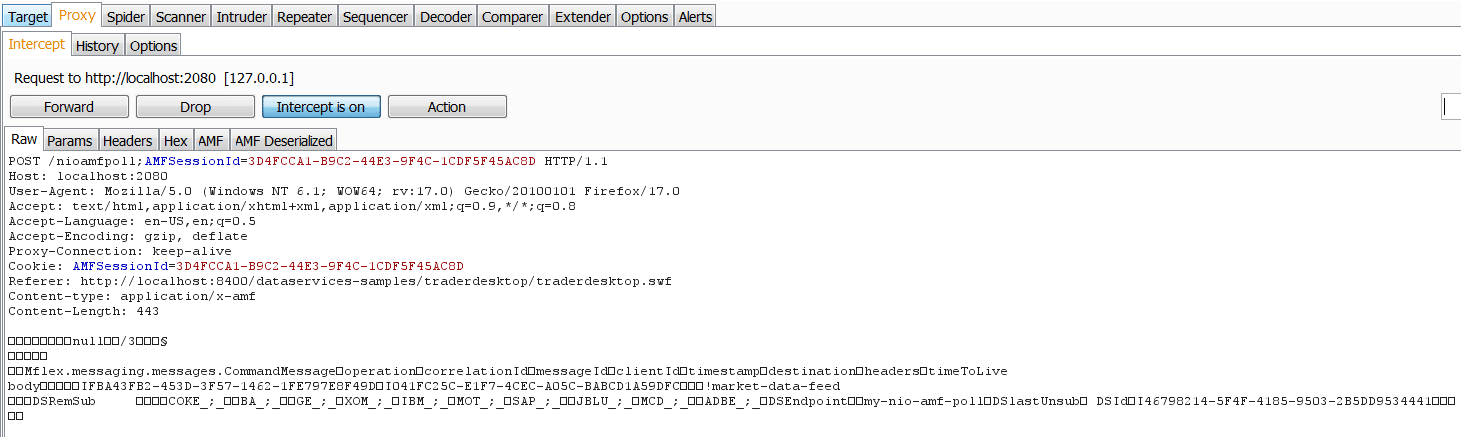
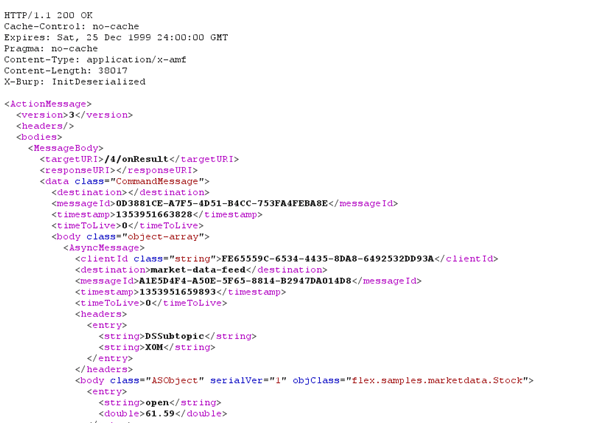
Sample deserialized Request:

Sample deserialized Response:
Source code and executables are available at:
https://github.com/NetSPI/burp-plugins/tree/master/BurpAMFDSer/Old_APIs
The sample application in the screenshot is TraderDesktop, provided as part of ADEP Data Services for Java EE 4.6 and could be downloaded at: https://www.adobe.com/cfusion/tdrc/index.cfm?product=livecycle_dataservices
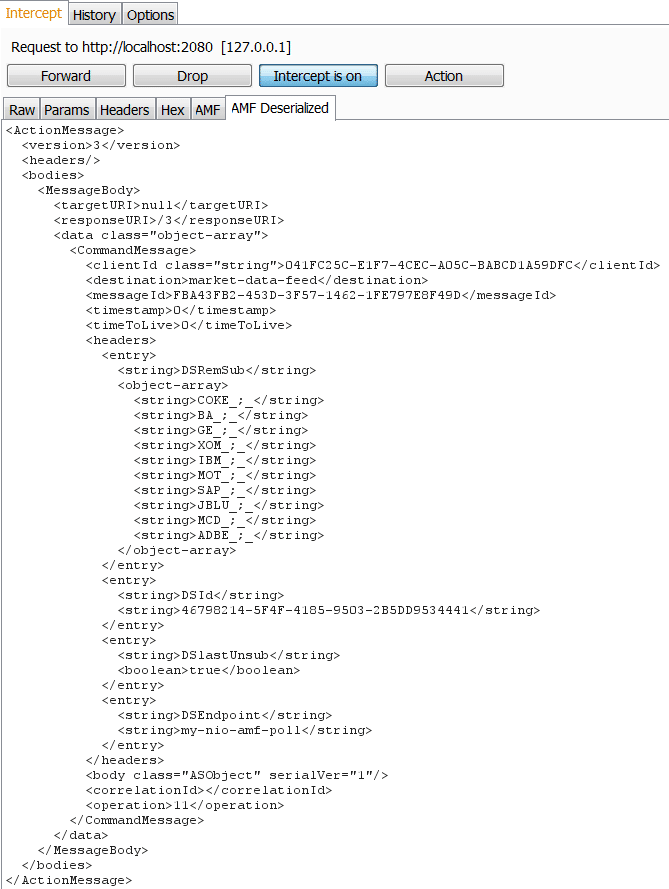
I’ve also developed a newer version of this plugin to be compatible with the new Burp Extender APIs (https://blog.portswigger.net/2012/12/draft-new-extensibility-api.html). Now you can modify AMF requests and responses in a separate tab.
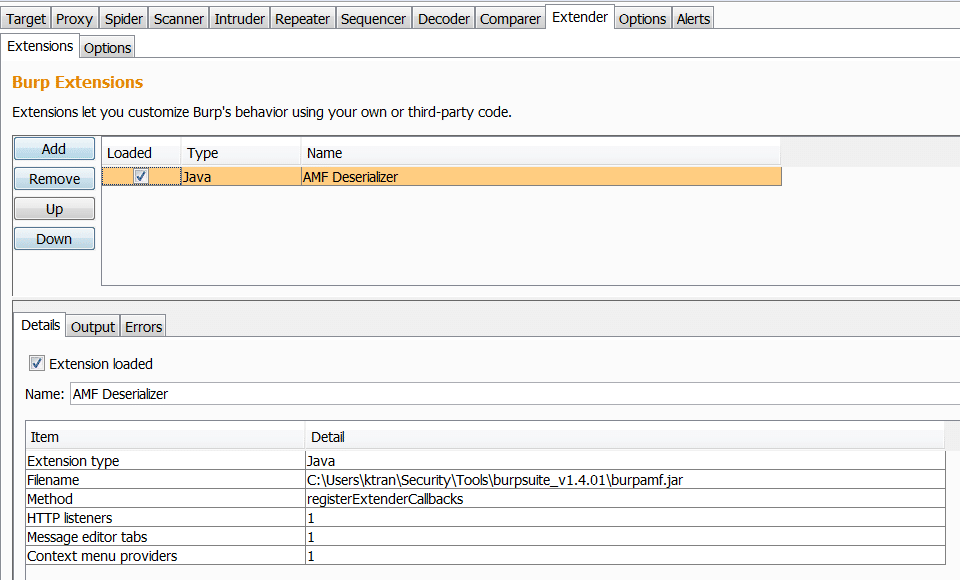
The new plugin can be loaded dynamically via Burp Extender:
Sample Request:
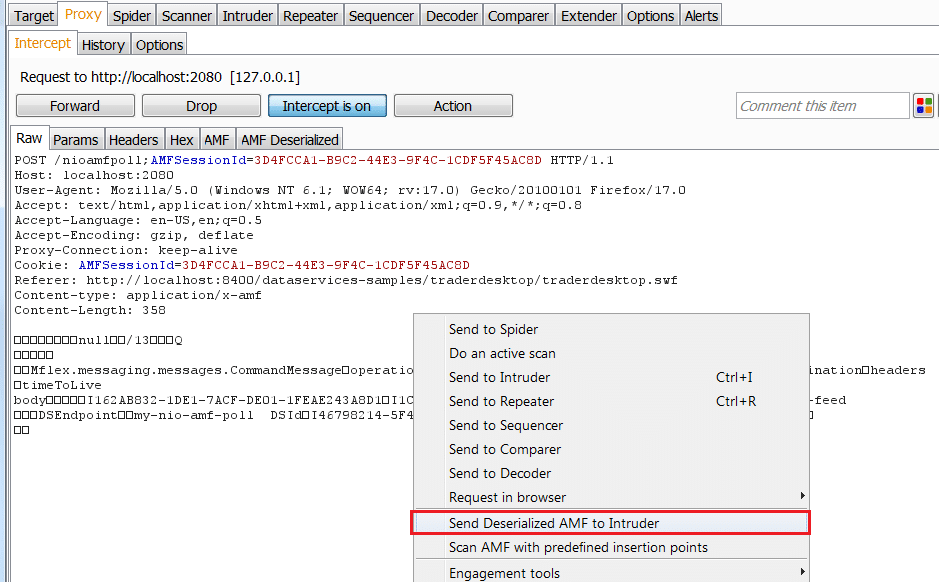
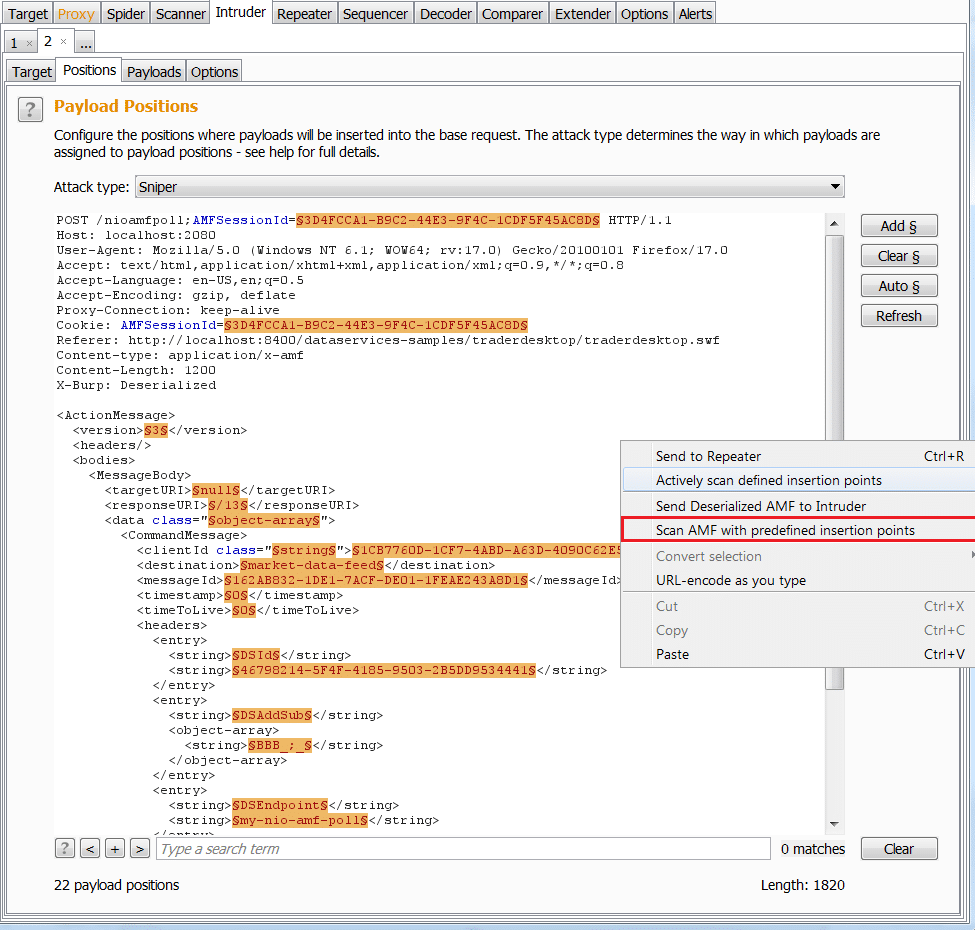
I also added 2 new menus to work with Intruder and Scanner (pro version only)
Send deserialized request to Intruder
Scan AMF (Pro version only)
Unfortunately, the new APIs are only available for Burp Suite Pro version 1.5.01 and later. Hopefully the author will update the free version soon.
If you are interested, source code and executable are available at: https://github.com/NetSPI/burp-plugins/tree/master/BurpAMFDSer/New_APIs
Explore More Blog Posts

Introducing the NetSPI Platform MCP
Discover how the new NetSPI Platform Model Context Protocol (MCP) integration gives you a live view of vulnerabilities in your environment and the speed of remediation needed to counter fast-paced attackers.

Administrating the Administrator, An OCI Identity Domains Permission Bypass
Discover how a permission bypass in Oracle Cloud Infrastructure (OCI) identity domains allowed lower-level administrator roles to create API keys for Identity Domain Administrators, leading to an unauthenticated privilege escalation path.

CVE-2026-78902: XSS to RCE in pfSense with one DNS request
Discover how a single DNS request can chain a stored Cross-Site Scripting (XSS) vulnerability into Remote Code Execution (RCE) on pfSense firewalls. Read the full technical breakdown of CVE-2026-78902 affecting the popular pfBlockerNG package.