Beautifying JSON in Burp

Most penetration testers know the pain of trying to view and modify an unparsed JSON string. For those that don’t, here’s a taste:
{"userId":1234,"username":"JakeReynolds","favorites":["Rubik's cubes","Doctor Who"],"dislikes":["Sushi","Vegetables"]}
When looking at thousands of these strings a day it is important for them to be well formatted and easily understandable. There currently exists a Burp Extension for beautifying JSON but it is written in Python, which requires Jython to be downloaded and added to Burp. There were also some issues with Jython and that extension not being as dependable as hoped. Due to those reasons we ported that functionality to Java which is run natively by Burp.
Java makes this extension one-click install, with support from Google’s GSON parser. The source code can be found on our Github as well as PortSwigger’s Github which includes updated build instructions.
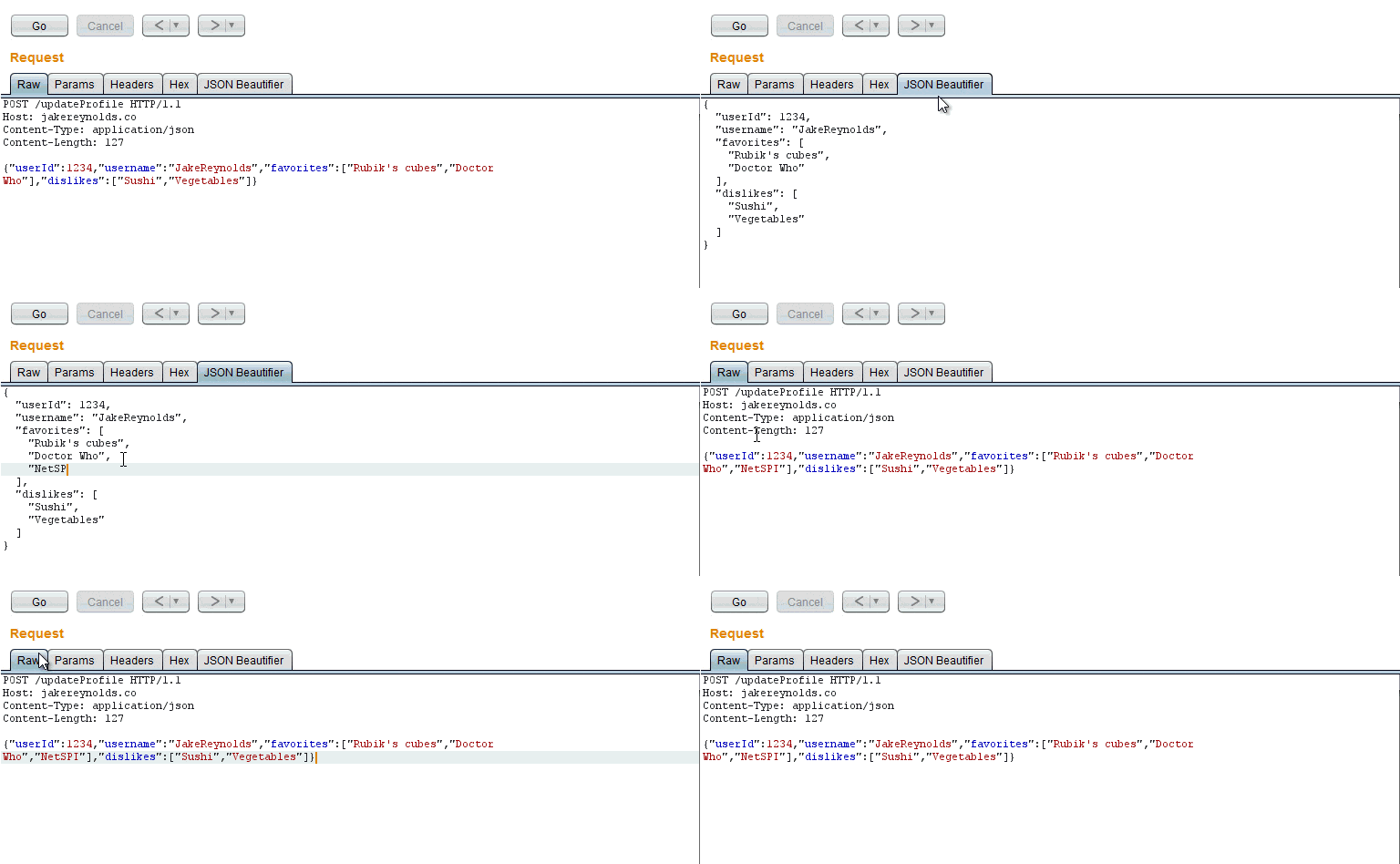
To install, simply go to Burp > Extender > BApp Store and select “JSON Beautifier”. The next time there is a JSON request in any of the Burp tabs there will be the option of “JSON Beautifier”. Any content modified in this tab will also be modified in the “Raw” tab. An example is below:
Thanks for checking out our Burp Extension! If you would like any features added feel free to create an issue on Github.
Explore More Blog Posts

CVE-2026-78902: XSS to RCE in pfSense with one DNS request
Discover how a single DNS request can chain a stored Cross-Site Scripting (XSS) vulnerability into Remote Code Execution (RCE) on pfSense firewalls. Read the full technical breakdown of CVE-2026-78902 affecting the popular pfBlockerNG package.

“StyleSmuggler” – Adobe Commerce, Adobe Commerce B2B, and Magento RCE (CVE-2026-75650): Overview and Takeaways
Adobe disclosed CVE-2026-7565, dubbed “StyleSmuggler,” on September 7th, 2026. The vulnerability, which received a maximal initial CVSS score of 10.0, affects Adobe Commerce, Adobe Commerce B2B, and Magento Open Source. The flaw allows an unauthenticated network-based attacker to execute arbitrary code by injecting PHP through Magento's email template engine.

Modern Adventures in Azure Privilege Escalation
Azure has been growing rapidly over the past few years As of June 2026, there were over 200 services, 897 built-in Azure RBAC roles, and 22,018 different permissions. The attack surface of Azure has also increased with this growth. There are also a number of new and updated tools that give us insight into the […]